Inspiration and Information About the Outdoors



Inspiration and Information About the Outdoors
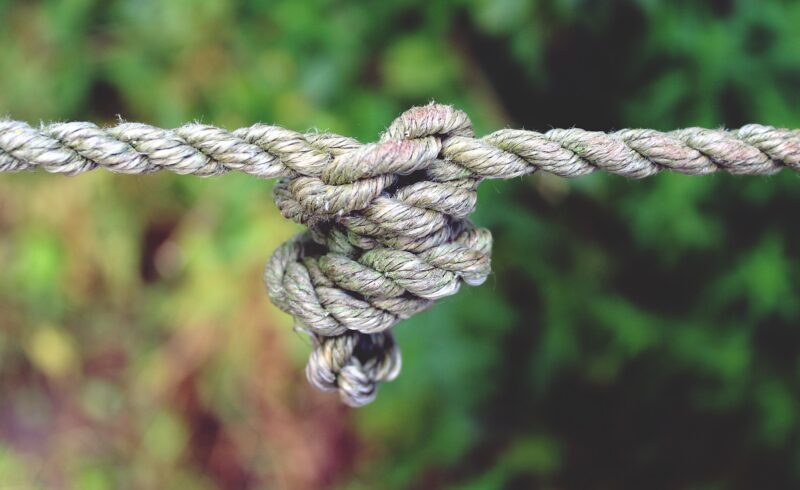
Any time you tie something in your daily life, such as your shoelaces or a trash bag, you are tying a knot to secure something. It is easy to recognize that different knots are meant for different weights or uses. The same goes for those necessary in the outdoors. These knots become even more important when you need to adapt to a situation you may not have an immediate fix to, such as repairing gear, anchoring tents, and securing equipment for safety reasons.
Before beginning to tie knots, it’s important to keep in mind some nuances to make sure you are also tying quality knots so that they can be used correctly. You also want to make sure you are buying good rope that can hold the amount of weight it will be supporting. When tying the knots, you also want to be aware of whether you are tying lines taut and with clean dressing. Knot dressing refers to how clean the lines created in these knots are. Making sure knots are tight and with clean lines can help ensure the rope doesn’t accidentally bind or slip and that the knots are strong.
For a number of outdoor activities, knots are not just a recommendation but an essential. This goes for activities such as sailing and rock climbing. For simpler everyday camping and securing gear, basic knots also can be the way to go for versatile use. Below are examples and photographs of common knots used in outdoor activities. You can find full animated instructions for these and other common knots HERE.
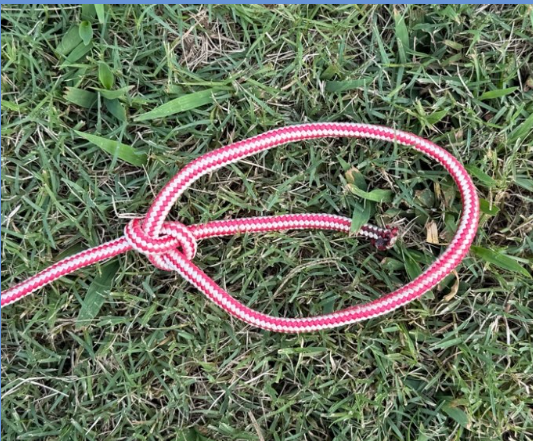
A bowline knot is primarily used to create a loop that is durable and fixed in place. Some of the most common uses of this knot include as an attachment from your tent or tarp to a stake, tying around an object you may need to pull, or tying bear bag ropes around a tree. This knot is also one of the most versatile knots you can use when it comes to boating and sailing activities. What makes this such a good knot is that it does not slip under tension. It is important to note as well that to keep this knot in place, constant tension must be placed on the knot.
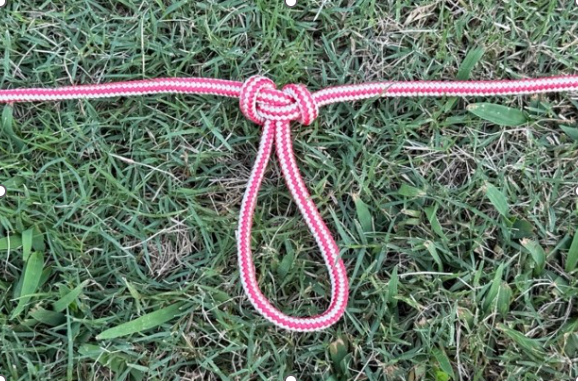
This specific knot is a way to create a secure loop in the middle section of a rope. Its use is not restricted by a need to be placed at the end of a rope. This versatility can convenient. This rope can be especially useful to isolate damaged parts of a rope or as carabiner hooks for hand and foot loops when climbing. What is particularly useful about this knot is that it is known to be more stable under weight than both a bowline knot and a figure eight knot, a knot also used in climbing. Despite this, it is still easy to undo, which makes it a more user-friendly beginner knot.
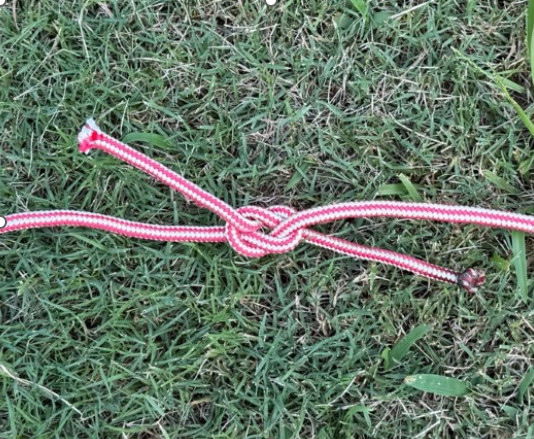
The square knot is particularly used as a way to join two separate ropes together. It can especially be useful when you need a longer rope. This knot can ensure that you can keep bundles securely together when tying them together, such as for a pack of campfire wood. In emergencies, it can also be a useful knot for fastening medical dressings temporarily before receiving medical care. The square knot is known as a very versatile knot whose application can be seen in both the backcountry and in daily necessities that may arise.
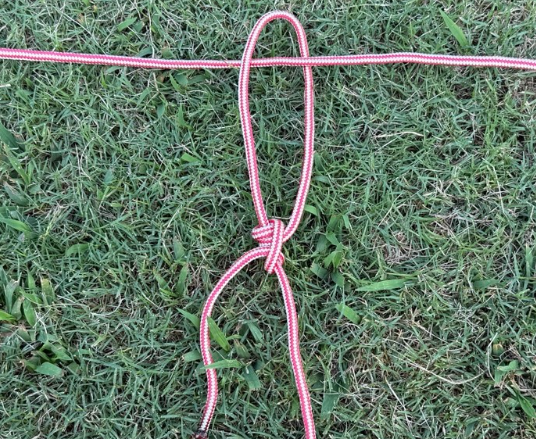
The taut-line hitch is a versatile incredible knot whose usability can most commonly be seen in how useful it can be around campsites. The taut-line hitch is often the go-to knot when it comes to attaching guidelines from a tent to the ground. It is also known for its ability to adjust the loop size that this hitch creates, all the while holding well under a large weight load. This makes it useful as a simple and versatile knot for those that situations in which the loop needs to be adjusted often.
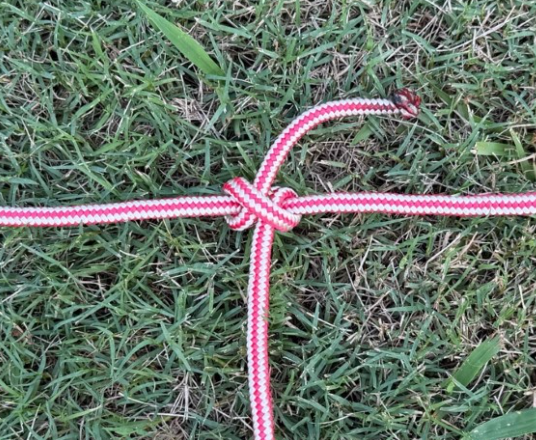
The clove hitch is a very simple knot that is easy to learn. This knot also has a wide range of uses. Like any usual hitch, it needs to be grounded around an object to keep itself intact. The best practice to keep the knot secure under lots of weight is to have pull on both ends in order to avoid slippage. You can also make this knot more secure by layering it and doing it more than once. This knot can be best utilized to tie up light objects such as tarps or to secure camping cargo to your car quickly. Clove hitches in outdoor climbing have also been consistently used to attach ropes to trees for secure climbing. It can also be used for creating anchors climbers can attach to. It is often used in boating and sailing as well as quick fasteners for hanging boat fenders from railings.
If you enjoy the outdoors, these five knots are some basics that are good to know how to do and when to do them. You never know when a situation might arise in the backcountry or at a campsite where an easy fix only involves a rope and the skill for how to tie it.

Click HERE to find out more!
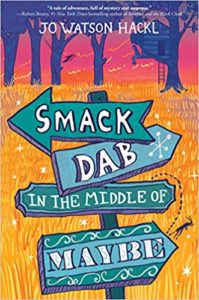
An Outdoor Adventure in an Overgrown Ghost Town
Eleven Days, Thirteen Clues, and One Kid Who Won’t Give Up
Can 12-year old Cricket survive on her own in an overgrown ghost town? Join Cricket as she forages, explores the outdoors, and tries to solve a thirty-year-old art mystery clue trail.
Click HERE to find out more!
Free Lesson Plans available!